Most of the money wasted in onshore developer hiring is not visible on the invoice. It shows up as vacancy cost, bad-hire cost, and pricing structures that quietly stack fees on top of each other. Here is where the real savings are, beyond just negotiating a lower headline percentage.
1. Price out the true cost of an unfilled seat, not just the fee
An open engineering seat costs you the output that role would have produced, plus the burden it puts on the rest of the team covering the gap. If a $10,000 recruitment fee gets a role filled in two weeks instead of three months, the fee is not the expensive part — the ten extra weeks of vacancy is. Optimize for time-to-hire, not just the smallest percentage on a contract.
2. Avoid stacked markups
Some engagements layer a staffing markup on top of a placement fee, or bundle a monthly management charge alongside the original recruitment cost. Read the fee structure carefully: a genuine flat, one-time fee with no ongoing markup is cheaper over a role's tenure than a lower headline percentage that comes with a recurring charge attached.
3. Negotiate a real replacement guarantee, not a token one
A bad hire costs far more than the original recruitment fee once you count ramp-up time, management attention, and the cost of running the search again. A genuine free-replacement guarantee during the probation period converts a bad-hire risk into a non-event instead of a second full-price search. Confirm the guarantee window is long enough to actually cover a real probation period (60-90 days), not a token two weeks.
4. Don't over-pay for roles that do not need retained search
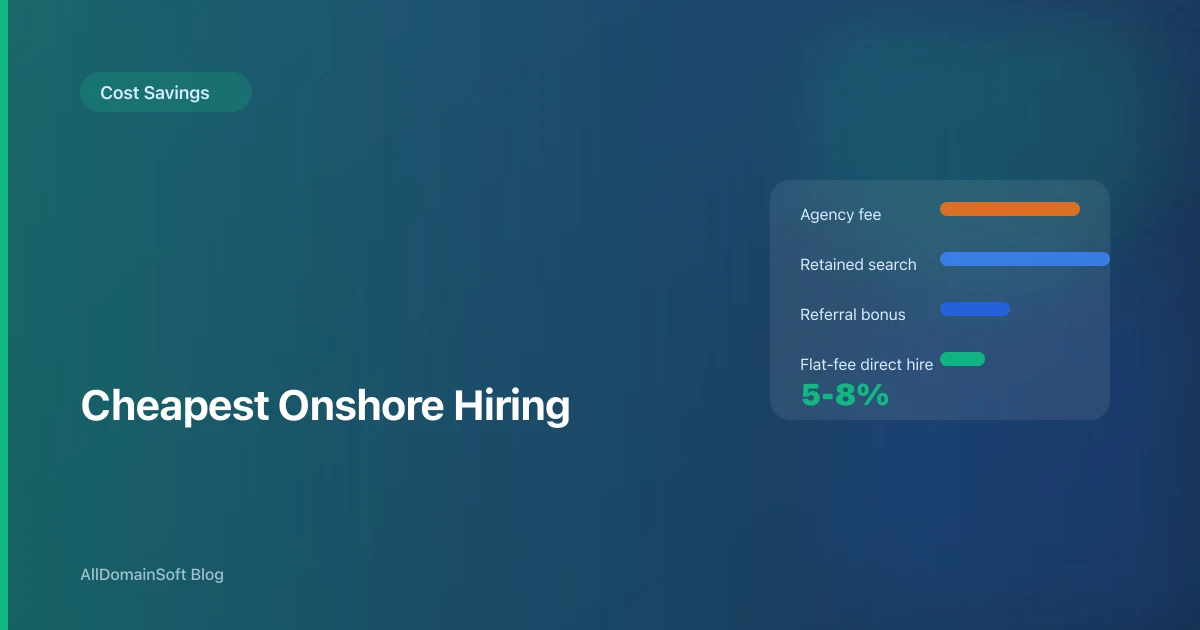
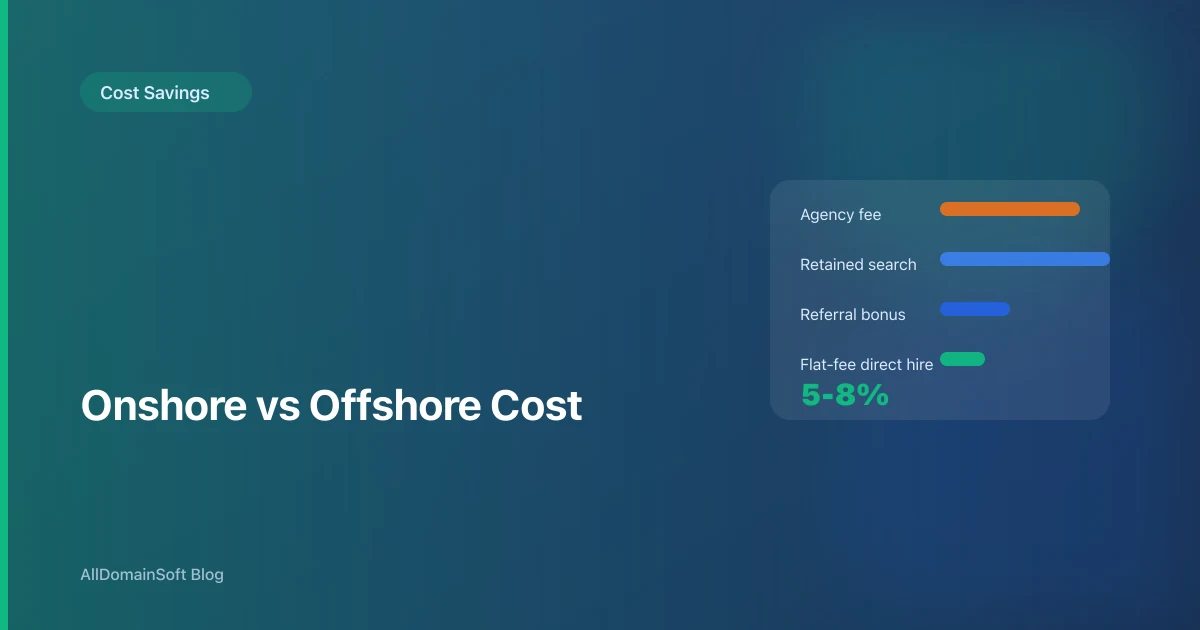
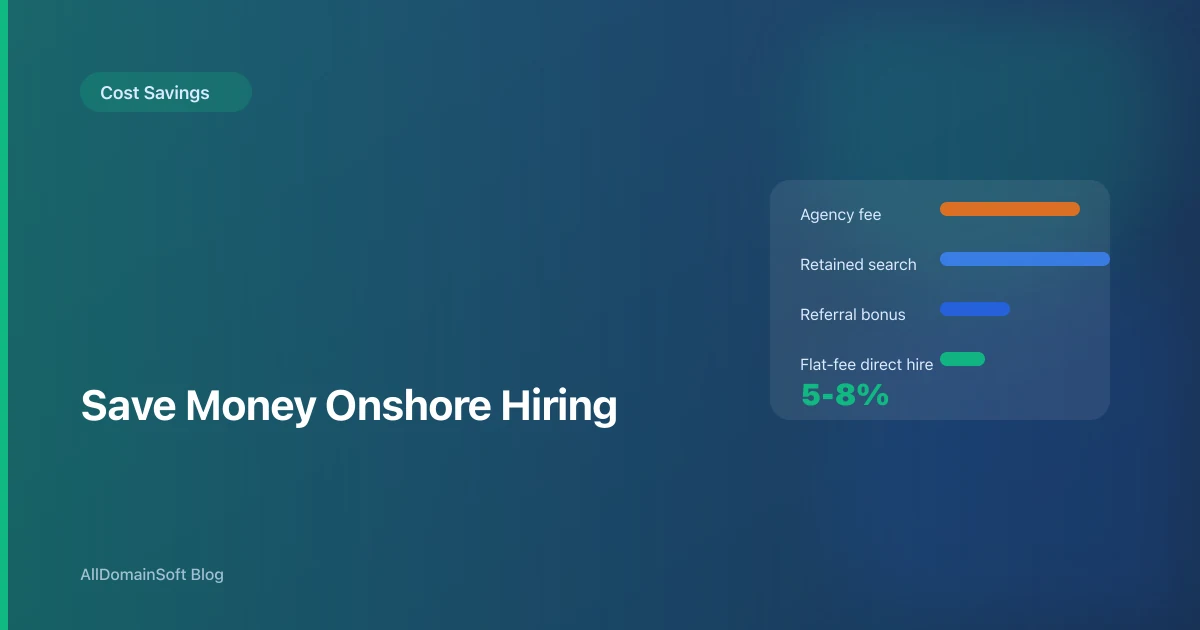
Retained executive search fees (25-33% plus a retainer) are appropriate for scarce, high-stakes leadership roles. Applying that pricing model to a mid-level individual contributor engineering hire is paying for exclusivity you do not need. Match the fee model to the actual scarcity of the role.
5. Use a blended onshore and offshore structure where it fits
Not every role needs to be onshore. Keeping architecture, client-facing, and leadership roles onshore while moving well-scoped execution work to a dedicated offshore or nearshore team can cut total team cost significantly without touching the roles where onshore genuinely matters. See our comparison of onshore vs offshore developers for where that line usually sits.
6. Fix your interview process before you fix your fee
A slow, poorly scheduled interview loop costs you candidates to faster-moving competitors, which forces you to restart searches and pay recruitment fees twice. Tightening your process, as covered in our 2-week onshore hiring playbook, often saves more money than negotiating another point off a placement fee.
What this looks like in practice
Our onshore developer hiring service is built around these exact principles: a flat 5-8% one-time fee with no salary markup and no monthly management charge, a free replacement guarantee if the candidate leaves during probation, and a two-week typical time-to-shortlist that limits vacancy cost.