Every founder asks how to reduce software development cost at some point. Usually right after a quote for three local seniors makes the runway math uncomfortable. The bad answers are cut QA, ship half the scope without cutting commitments, or hire the cheapest hourly rate on a marketplace and hope.
The good answers change the cost structure. Here are the levers we see work for SMEs and scale-ups, in the order we would pull them.
1. Separate headcount from output
Cost is not the same as velocity. One expensive senior who unblocks architecture can beat three juniors who need rework. Before you cut dollars, ask what output you need per quarter. Sometimes the fix is one strong lead plus two mid-level engineers offshore, not five local hires.
2. Pick the right engagement model
Staff augmentation adds bodies to your existing team fast. Good for short spikes.
Dedicated offshore teams cost less per person at scale because the vendor carries office, HR, and retention. Good for 3+ month product work.
Project-based agencies quote fixed price. Good when scope is frozen; painful when scope shifts weekly.
If your question is how to reduce development cost over 12 months, dedicated teams usually win for ongoing product work. We wrote about the trade-off in staff augmentation vs dedicated teams on the blog.
3. Location is still the largest lever
A senior developer in San Francisco, London, or Sydney costs multiples of the same role in Gurgaon, fully loaded. The gap is not because India writes worse code. It is labour markets and cost of living.
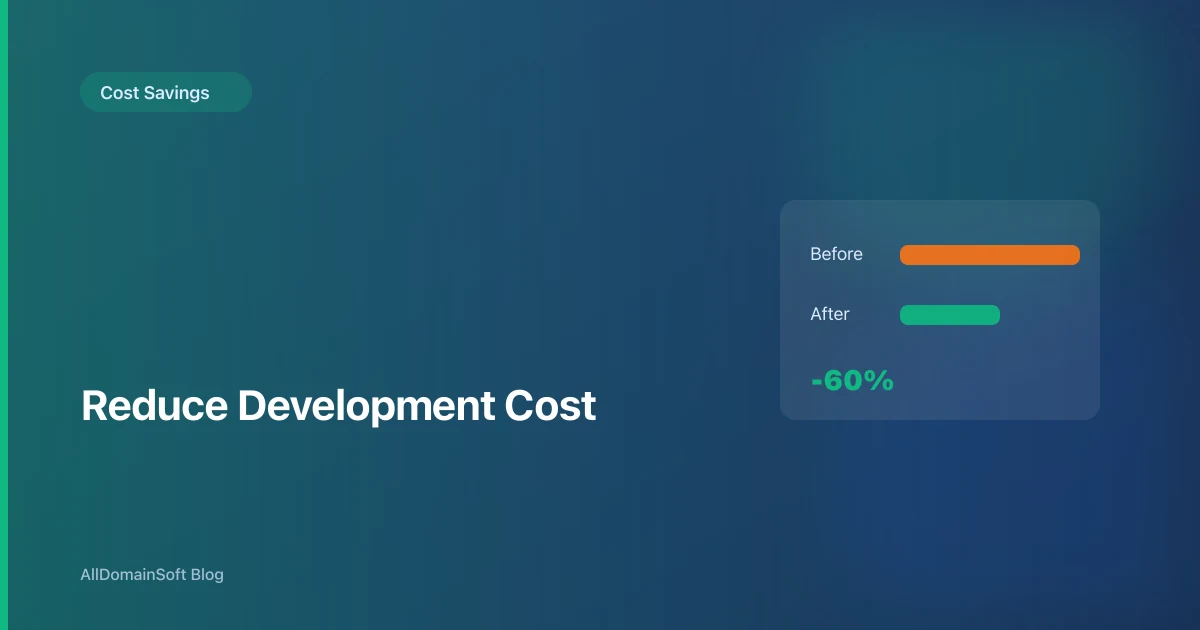
Hiring dedicated developers in India through an office-based vendor (not a rotating freelance bench) typically saves 60-70% versus US or UK local hires. See our location pages for Asia, India, Haryana, and Gurgaon if you want the geographic breakdown.
4. Stop paying for the same work twice
Rework from unclear specs, missing acceptance criteria, and absent code review is a tax. It shows up as we need another sprint, not as a line item. Cheaper fixes:
- Written ticket definitions before sprint start
- PR review on every merge
- A single source of truth for product decisions (Notion, Linear, whatever you pick)
5. Scope is a cost knob
MVP means minimum viable, not maximum wishlist. Every feature you defer is money you keep. Founders who list must-have for launch vs phase two before talking to vendors get proposals that match reality.
6. Tech debt has interest
Skipping tests and hardening to hit a demo date often creates a 3-month recovery project later. That is not savings. Budget maintenance sprints the same way you budget features.
7. Measure fully loaded cost, not salary
Local salary plus benefits, payroll tax, equipment, recruitment, management time, and office. Offshore quotes should also be fully loaded: salary, office, HR, account management. Compare like with like. Our true cost of hiring in India post walks through the India side.
8. When offshore is the wrong cost cut
Offshore fails when:
- You have no product owner on your side
- You change direction daily without documentation
- You need someone in your office full time
- You optimize for hourly rate instead of retention
It works when you treat the team as long-term capacity with clear boundaries.
Putting it together
A practical stack for reducing cost without tanking quality:
- Freeze phase-one scope
- Hire a dedicated squad offshore (3-5 people) with office and IP protection
- Keep architecture and product local if needed
- Run overlap hours and async discipline
- Revisit headcount quarterly based on velocity, not panic
If you want numbers for your stack, start at /pricing/ or /contact/ for a proposal. If you are UK or US based, the country pages spell out currency and compliance.