"Cheapest" and "lowest quality" get treated as the same thing in hiring conversations, and they are not. The actual cost of onshore recruitment varies wildly by model, and the cheapest model on paper is not always the flashiest one.
Here is what onshore developer hiring actually costs across the common models, and where the real savings are.
The models and their real cost
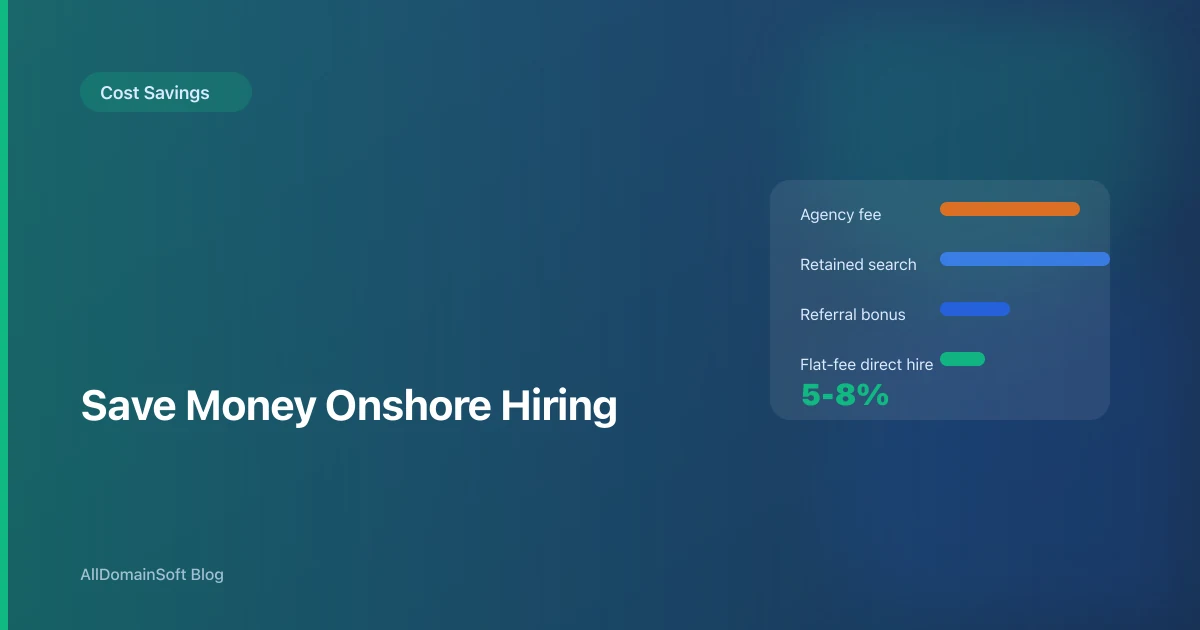
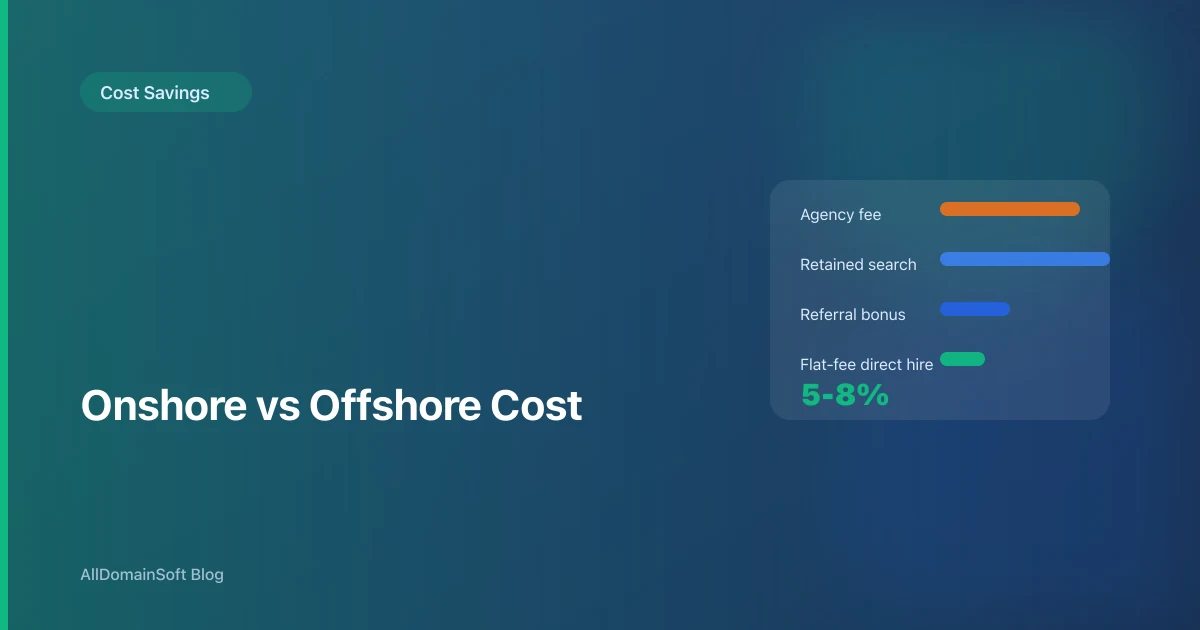
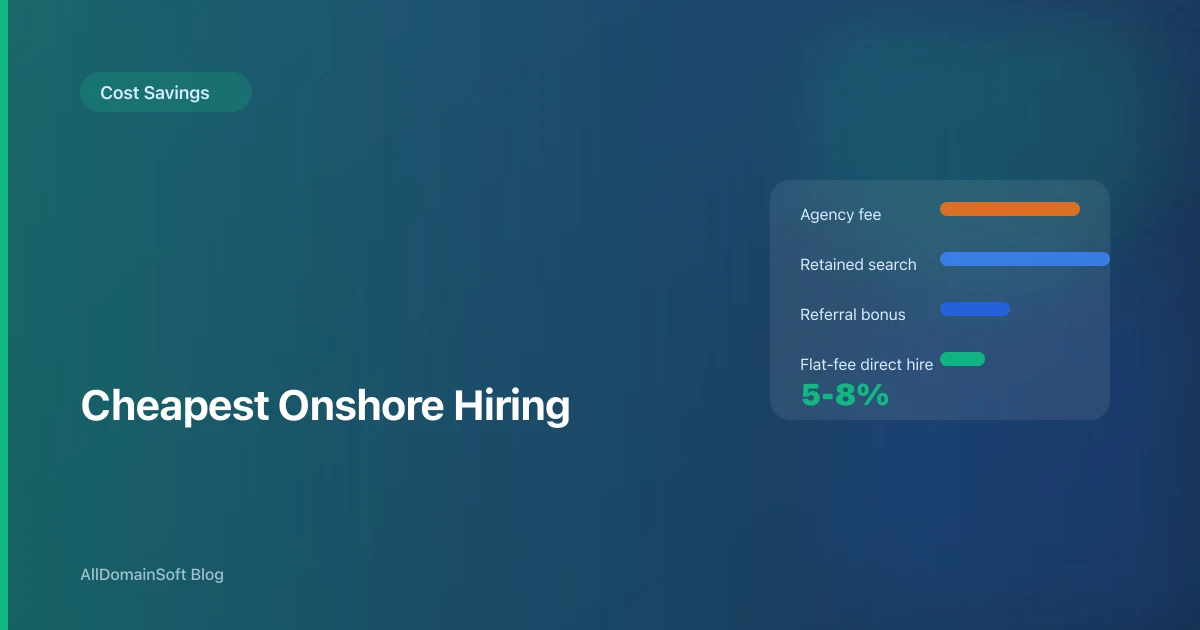
Contingency recruitment agencies charge 15-25% of the candidate's first-year salary, paid only if they place someone. For a $130K hire, that is $19,500-$32,500. You are not charged if no hire is made, but the fee is baked into the assumption that most searches convert eventually, and agencies often run multiple similar searches for other clients in parallel, so your search does not get full attention.
Retained executive search charges 25-33% plus an upfront retainer paid regardless of outcome, typically reserved for VP/C-level hires where dedicated, exclusive search effort is worth paying for before a placement happens.
In-house recruiter looks cheap on a per-hire basis but is not free: a full-time recruiter fully loaded runs $70K-$110K depending on market, and that cost is fixed whether they make two hires a year or twenty. For a company hiring occasionally, this is usually the most expensive option per hire.
Job board postings and DIY sourcing have the lowest direct cost but the highest hidden cost: hiring manager and team time spent screening resumes and running interviews without a structured pipeline, which routinely adds weeks to time-to-hire and is rarely tracked as a real cost.
Flat-fee direct-hire recruitment, the model we run for onshore developer hiring, charges 5-8% of annual salary as a one-time fee — no retainer, no monthly markup, and the fee is intentionally set at or below what most companies already pay out in referral bonuses. For a $130K hire, that is $6,500-$10,400.
Why the flat-fee model is usually cheapest without cutting corners
The screening quality does not need to drop to hit a lower fee. What actually drives the fee down is the absence of the ongoing markup that staffing-agency and RPO models build in, and running sourcing against an existing warm pipeline instead of starting cold for every search. The end-to-end process — sourcing, screening, interviews, and offer support — is unchanged; the pricing structure is what is different.
Where "cheap" actually gets expensive
The real cost trap in onshore hiring is not the recruitment fee, it is a bad hire. A developer who leaves in month two costs you the original fee, the lost ramp-up time, and a second search from scratch. This is why a genuine replacement guarantee during the probation period matters more to total cost than shaving another percentage point off the placement fee. Our onshore developer hiring service includes a free replacement if the candidate leaves during probation, specifically to remove that downside risk.
The honest bottom line
For most mid-to-senior individual contributor engineering roles, a flat-fee direct-hire model with a replacement guarantee is the cheapest option that does not compromise on screening quality. Reserve retained search for genuinely scarce, high-stakes leadership hires where exclusive dedicated effort earns its higher price.